
Buffalo Signals Laboratory develops scenarios that explore how emerging signals could reshape Buffalo and Western New York. Each scenario connects changes across the economy, workforce, climate, technology, culture, infrastructure, and community life to examine several plausible ways the future could unfold. The goal is not to predict what will happen, but to help the region think ahead, test assumptions, and prepare for different possibilities.
PUBLISHED MONTHLY.
EXPLORING WHAT COULD COME NEXT.
FORTHCOMING

The Deprescribing Capital
New York’s single-payer system pays for outcomes, so Buffalo becomes the first city to treat too many prescriptions as a public health problem. A medication-review service on the Medical Campus, plus longevity technology adapted from pro sports and youth injury programs, turns the East Side’s neighborhood health hubs into a model for healthy aging. The open question is whether the system, and residents’ trust in it, can hold.

The Gorge Circuit
The world’s top eVTOL racing series finishes its season over Buffalo’s Outer Harbor and the Niagara Gorge, drawing a new aerospace cluster to a city with a century of aircraft-building behind it. Delivery drones and digital rail keep moving when lake-effect snow closes the roads. But the noise falls on some neighborhoods while the benefits go to others.

Sacred Ground Becomes the Neighborhood Commons
Buffalo stops treating cemeteries and shrinking parishes as problems to manage and starts treating them as shared ground. Burial grounds become biodiversity reserves, and former churches become community centers with indoor farms downstairs and conversations about dying, grief, and care upstairs. The result may be a distinctive Buffalo institution, or a patchwork that differs from one neighborhood to the next.
Buffalo Grows as a Water-Secure City and Rations Its Water Infrastructure
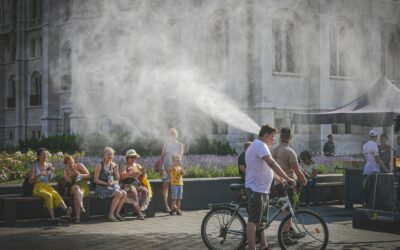
Many newcomers come from drought-stressed metros in the Southwest and from abroad, drawn by the Great Lakes’ water supply. The irony is that Lake Erie is becoming less predictable as a source. The city and the Buffalo Water Board adopted a “water budget” in 2037. The approach works, but it has costs. Water and sewer bills have risen faster than incomes in Black Rock, Riverside, and the West Side, where many longtime residents live on fixed incomes.

Reshoring Demand Meets a Shortage of Clean Industrial Land
In 2034, manufacturers want to be in Western New York. Cleaning up contaminated land has become a growth industry, with contractors, testing labs, and University at Buffalo researchers working on lower-cost methods. The region is gaining jobs, but the neighborhoods that carry the contamination are not getting the factories or the paychecks.

Buffalo Airport Fuel Supply Limits Air Service
By 2031, the Buffalo Niagara International Airport has had five fuel outages in three years. The central question in 2031 is who pays to fix it. In the meantime, Buffalo is becoming a secondary airport that loses market share every year to a larger airport across the border.