Near-term · 2026–2031
Probable
LEO Satellite Networks Expand Broadband Access
Technology & Digital Infrastructure · Systems & Infrastructure · Scanned 2026-08-09 · Updated 2026-10-13
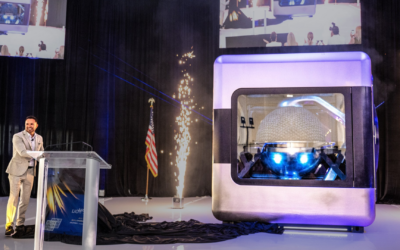
The transition of Amazon’s Project Kuiper to ‘Amazon Leo’ and its imminent U.S. service launch marks a significant shift in the regional digital landscape. With a planned constellation of over 3,000 satellites, this Low Earth Orbit (LEO) network provides a high-speed, low-latency alternative to traditional fiber and geostationary satellites. For Western New York, this technology directly addresses persistent ‘last-mile’ connectivity gaps in rural Niagara, Erie, and Southern Tier counties, where terrestrial infrastructure remains cost-prohibitive for many residents and small businesses. The deployment of compact customer terminals—ranging from the Leo Nano to the Leo Ultra—will allow for flexible, high-bandwidth access in previously unreachable areas.
The integration of Amazon Leo with AWS and the use of optical inter-satellite links will likely catalyze the region’s Cross-Border Economy and Manufacturing & Industry sectors. Businesses operating across the Buffalo-Niagara border can leverage seamless, secure data routing that bypasses traditional ground-based bottlenecks. Furthermore, the availability of mobile-ready satellite broadband enables remote operations for WNY’s agricultural and logistics sectors, which are vital to the regional economy. As service begins in both the U.S. and Canada, the region is positioned to benefit from enhanced binational digital connectivity.
As the LEO market matures, regional planners must evaluate the impact of satellite-driven digital inclusion on long-term municipal fiber investments. While Amazon Leo offers a rapid solution for underserved communities, its reliance on a massive satellite constellation introduces new considerations for local digital infrastructure strategy. The competition between LEO providers will likely drive down costs for WNY consumers, but the long-term sustainability of these networks depends on meeting strict regulatory deployment deadlines and overcoming current launch vehicle shortages.
Main Drivers
Closing the digital divide in underserved rural areas
Integration of satellite networks with global cloud infrastructure
Advancements in low-cost, compact satellite terminal technology
Regulatory pressure to meet FCC deployment deadlines
Projected Scenarios
Plausible
Rapid Satellite Integration Transforms WNY Digital Connectivity
Amazon Leo service blankets Erie and Niagara counties, enabling high-tech agricultural startups in Wyoming and Cattaraugus counties to scale operations instantly. Buffalo’s logistics hubs and cross-border manufacturing plants adopt the network for real-time data flow, bypassing aging, legacy terrestrial infrastructure in the Southern Tier.
Buffalo cements its role as a cross-border digital gateway, effectively erasing the rural-urban connectivity divide that has historically hindered regional economic parity.
Probable
Regulatory Hurdles Stunt Regional Satellite Rollout
Strict FCC mandates and launch vehicle failures delay constellation density, causing Amazon Leo to pivot away from Western New York’s secondary market in favor of larger metros. Local residents in rural Erie County continue to rely on patchy, high-latency broadband while municipal fiber projects remain stalled due to budget deficits.
The region remains trapped by physical geographic constraints, forcing a return to intensive, taxpayer-funded local infrastructure battles to provide basic connectivity.
Probable
Satellite Access Becomes Standard Utility Background Noise
Amazon Leo establishes a niche presence in WNY, serving as a secondary fallback for businesses rather than a revolutionary disruption. It functions quietly alongside existing fiber-to-the-home initiatives in Buffalo and Amherst, neither solving the last-mile crisis nor failing completely.
Buffalo sustains its current, uneven pace of digital modernization without gaining a significant competitive edge over peer Rust Belt cities.
Possible
Space Debris Event Disrupts Regional Digital Commerce
A sudden, catastrophic Kessler syndrome event in LEO forces an immediate, region-wide blackout of satellite-dependent services across Western New York. Local manufacturing, logistics, and cross-border trade are paralyzed overnight, highlighting the dangerous fragility of relying on a single orbital infrastructure provider.
Buffalo is forced into an emergency, rapid-response effort to rebuild its localized, hardened terrestrial network infrastructure to safeguard regional economic sovereignty.
🔀 Cross-Impact Analysis
×
Satellite Broadband Competition Increases Global Connectivity
Reinforcing
Increased competition between providers like Amazon Leo and Starlink will accelerate the price-drop for high-speed internet across rural Western New York, particularly in the Southern Tier. This influx of affordable, high-speed access will solidify the region as a viable hub for distributed work and digital logistics, effectively erasing the geographic penalties that previously hindered local business growth.
×
Satellite Operators Demand Orbital Data Sharing
Counteracting
The necessity of increased orbital data sharing to prevent collisions may introduce regulatory delays or stricter technical constraints on LEO deployment, potentially stalling the rapid rollout promised in WNY. If orbital congestion forces a slowdown in service activation, local municipal planners might be forced to pivot back to investing in terrestrial fiber as a more reliable, stable, and locally-controlled backup.
×
Nuclear Clocks Enable GPS-Independent Navigation
Transforming
The emergence of nuclear clocks provides a secondary navigation layer that could be coupled with the high-bandwidth LEO network to create a highly resilient autonomous logistics network across the Buffalo-Niagara border. This fusion of precision timing and ubiquitous satellite data would revolutionize the regional cross-border shipping industry, allowing for fully autonomous trucking and drone delivery even in environments where traditional GPS might fail.
×
AI Interaction Norms Evolve
Reinforcing
As behavioral etiquette for AI interactions becomes standard, the widespread adoption of LEO broadband will provide the high-speed, low-latency foundation necessary for seamless human-AI collaboration in rural WNY classrooms and offices. This synchronization ensures that regional users, regardless of their proximity to Buffalo’s urban core, can participate fully in the emerging digital economy without being disadvantaged by connectivity lags.
×
AI Governance Standardizes Mortgage Lending
Transforming
The standardization of AI in mortgage lending could combine with rural LEO connectivity to revitalize housing markets in remote Niagara and Erie county towns by accurately assessing the value of properties that were previously ‘data-dark’. If AI lending models can reliably interpret connectivity-rich rural assets, it could lead to increased regional development and a dispersal of the Buffalo-Niagara workforce into historically underserved rural landscapes.
×
Specialized Hardware Enables Personal AI
Reinforcing
Local hosting of personal AI agents on specialized hardware reduces the bandwidth burden on LEO networks while ensuring privacy-conscious operations for WNY businesses. By combining edge computing hardware with the robust, always-on connectivity of Amazon Leo, local SMEs in the Southern Tier can maintain high-functioning digital assistants that work reliably even during periods of heavy weather-related network fluctuations.
🌊 Cascading Implications
Sources & Links
Buffalo Signals Laboratory · Technology & Digital Infrastructure