Near-term · 2026–2027
Probable
Modular Data Centers Accelerate AI Inference
Technology & Digital Infrastructure · Systems & Infrastructure · Scanned 2026-10-07
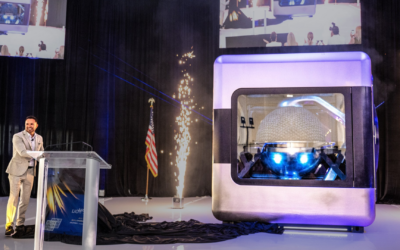
The emergence of modular, shipping-container-based data centers represents a shift in how AI inference infrastructure is deployed. By stripping away components required for general-purpose cloud workloads and focusing exclusively on high-density GPU compute, these units can be transported and activated in days rather than months. This model allows for rapid scaling of inference capacity closer to end-users while significantly reducing costs through specialized hardware and liquid cooling.
For regions like the Buffalo-Niagara area, this technology offers a flexible pathway to enhance local digital infrastructure. Because these units are modular and can be powered by renewables, they provide a mechanism to integrate high-performance AI compute into existing industrial or commercial sites without the extensive lead times and capital expenditure associated with constructing traditional, large-scale data centers.
Main Drivers
Demand for lower-cost AI inference
Need for rapid infrastructure deployment
Advancements in high-density liquid cooling
Shift toward specialized, purpose-built hardware
Projected Scenarios
Probable
Rapid AI Compute Hubs Transforming Industrial Zones
Abandoned industrial sites in the Lackawanna waterfront and near the former Bethlehem Steel plant are retrofitted with modular data centers using Niagara Falls hydroelectric power. Local manufacturing firms leverage this proximity to deploy low-latency AI diagnostics for robotics and supply chain optimization directly on factory floors.
Buffalo gains a distinct competitive advantage as a low-cost, high-compute manufacturing innovation hub.
Plausible
Centralized Cloud Dominance Stifles Local Deployment
National hyperscalers prioritize massive, centralized campus builds in other states, leaving the modular, edge-focused model economically unviable for smaller regional markets. Efforts to activate sites in the Buffalo Niagara Medical Campus stall as regulatory hurdles and high utility grid-connection costs prevent containerized units from gaining traction.
Buffalo remains reliant on expensive, remote data infrastructure rather than building its own resilient compute capacity.
Probable
Niche Integration in Institutional Research Projects
Modular data centers remain a specialty tool utilized exclusively by University at Buffalo researchers and select state-funded AI initiatives. These units support high-end academic modeling but never transition into the broader commercial or industrial fabric of the city.
The technology contributes to academic excellence but fails to catalyze a significant regional economic shift.
Possible
Subterranean Salt Mine Data Cooling Innovation
Developers repurpose decommissioned underground salt mines beneath Western New York as massive, naturally cooled modular data hubs. These ultra-secure, climate-stabilized environments attract global financial institutions, fundamentally shifting the region’s identity from a rust-belt relic to a global secure data fortress.
The region utilizes its unique geology to solve the massive thermal management challenges inherent in global AI infrastructure.
🔀 Cross-Impact Analysis
×
Digital Media Provenance Verification Expands
Reinforcing
As Buffalo leverages modular data centers to host local AI inference, these units can double as edge-computing nodes for real-time media verification services. This creates a dual-use infrastructure that positions WNY as a hub for both high-speed processing and trustworthy digital content production.
×
Quantum Error Correction Enables Universal Computing
Transforming
The eventual integration of quantum hardware into modular data centers will shift Buffalo’s role from a consumer of AI services to a lead developer of fault-tolerant computing infrastructure. Leveraging the region’s existing industrial power access, these units could house early-stage hybrid quantum-classical clusters, bypassing the need for legacy supercomputing facilities.
×
Satellite Operators Demand Orbital Data Sharing
Reinforcing
The rapid deployment of modular data centers provides the compute capacity necessary for the Buffalo-Niagara region to host satellite traffic management and orbital collision modeling centers. By placing this compute in containers, the region can quickly adapt to the surging data flow from LEO satellite constellations passing over the Great Lakes.
×
Nuclear Clocks Enable GPS-Independent Navigation
Transforming
Deploying nuclear-clock-enabled servers within modular data centers could establish WNY as a critical node for high-precision timing infrastructure that serves the entire Eastern Seaboard. This transforms the region’s digital footprint from a general-purpose hub into a foundational provider of sovereign navigation data.
×
AI Interaction Norms Evolve
Counteracting
Increased regulatory and behavioral requirements for AI models may necessitate a local ‘compliance layer’ within modular data centers to monitor and filter interactions in real-time. This adds operational complexity to the local deployment of modular units, requiring Buffalo-based data managers to prioritize governance over pure processing speed.
×
AI Governance Standardizes Mortgage Lending
Reinforcing
Standardized AI lending protocols will require significant localized compute to ensure fairness and auditability, driving demand for modular data centers in Buffalo’s growing financial technology sector. By housing these audited inference models locally, WNY firms can provide transparent, rapid lending services while maintaining strict compliance with evolving financial oversight.
🌊 Cascading Implications
Sources & Links
Buffalo Signals Laboratory · Technology & Digital Infrastructure