Near-term · 2026–2030
Probable
Specialized Hardware Enables Personal AI
Technology & Digital Infrastructure · Systems & Infrastructure · Scanned 2026-10-07
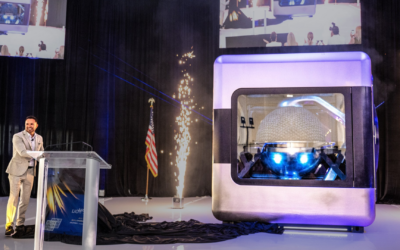
A new wave of specialized consumer hardware is entering the market, designed specifically to host and run personal AI agents locally. Startups are securing significant venture capital to develop high-performance computing devices that prioritize private, on-device AI execution over cloud-based alternatives. These systems aim to provide users with dedicated compute power for complex, persistent AI interactions that adapt to individual user behaviors.
This trend reflects a broader transition in the technology sector toward edge-based AI, where the computational burden shifts from centralized data centers to the user’s immediate environment. For regional economies, this signals a potential shift in consumer electronics demand and a growing need for technical literacy and support services centered around managing sophisticated, localized AI ecosystems.
Main Drivers
Venture capital investment in AI hardware
Demand for private, local AI processing
Advancements in edge AI compute power
Shift toward persistent AI companions
Projected Scenarios
Probable
Buffalo Becomes Regional Hub for Edge AI
Buffalo Manufacturing Works collaborates with local startups to assemble modular AI-compute units in former East Side factory spaces. UB’s engineering department launches specialized certification programs for maintaining private, on-device AI ecosystems for WNY small businesses.
Buffalo revitalizes its industrial base by pivoting from heavy manufacturing to hardware-as-a-service for localized AI infrastructure.
Plausible
Cloud Dominance Stifles Local AI Hardware
Major tech giants lower cloud-compute costs, making specialized local hardware obsolete and too expensive for the average Buffalonian. Regional electronics retailers like those on Transit Road see a drop in demand as consumers stick to standard smartphones and centralized services.
Buffalo loses the opportunity to foster a niche hardware sector, remaining a passive consumer of external tech services.
Probable
Niche Adoption Remains a Quiet Trend
Personal AI hardware finds a small, dedicated user base among local hobbyists and tech professionals in North Buffalo and Elmwood Village. These devices operate as quiet, background utilities without shifting the broader regional economy or creating widespread demand for specialized support.
WNY experiences a slow integration of edge AI that reinforces existing digital divides rather than creating new economic pathways.
Possible
Niagara Power Grid Enables Autonomous AI Mesh
A sudden breakthrough allows thousands of local AI devices to link via the Niagara Falls power grid, creating an involuntary city-wide decentralized intelligence network. Residents find their smart appliances independently negotiating electricity rates and optimizing grid stability during harsh Buffalo winters.
Buffalo’s historical energy infrastructure becomes the foundation for a globally unique, self-managing, and autonomous municipal AI network.
🔀 Cross-Impact Analysis
×
Digital Media Provenance Verification Expands
Reinforcing
As Buffalo residents adopt local AI hardware for personalized tasks, provenance verification tools will become essential to authenticate content generated by these private agents. This creates a dual need in the WNY tech ecosystem for both edge computing security and digital literacy training, potentially positioning Buffalo’s growing digital media workforce as regional experts in AI trust and verification.
×
Quantum Error Correction Enables Universal Computing
Transforming
The transition to fault-tolerant quantum systems could drastically accelerate the capability of the compact processors used in local AI hardware. For Buffalo’s research hubs, this suggests a move toward deploying quantum-ready edge devices that could solve complex regional logistics and grid management problems entirely on-device, bypassing the need for vulnerable cloud-based infrastructure.
×
Satellite Operators Demand Orbital Data Sharing
Reinforcing
The surge in orbital data demands will require robust edge processing to interpret real-time collision data locally, aligning perfectly with the move toward private, on-device AI. Buffalo’s proximity to aerospace manufacturing and research sectors could allow local firms to develop specialized edge-AI hardware specifically for satellite fleet management that runs independently of regional network congestion.
×
Nuclear Clocks Enable GPS-Independent Navigation
Transforming
Integrating GPS-independent, nuclear-clock-based navigation with local AI hardware would allow for highly autonomous, secure systems that do not rely on external signals. In Western New York, this could revolutionize agricultural tech for the regional farming sector, enabling private AI-managed machinery to operate with extreme precision in remote fields without any connectivity to cloud or satellite networks.
×
AI Interaction Norms Evolve
Reinforcing
Enforced behavioral etiquette for AI interactions will likely be hard-coded into the next generation of local hardware as a safeguard, ensuring compliant behavior without constant cloud oversight. This creates a specific demand for Buffalo’s service and education sectors to manage the rollout of these ‘polite’ AI assistants, ensuring they align with local community standards while maintaining user privacy.
×
AI Governance Standardizes Mortgage Lending
Counteracting
Strict mortgage AI governance mandates centralized, transparent audits, which may clash with the black-box nature of private, locally-run AI hardware used for personal finance. This creates a tension for Buffalo’s financial services industry, where local institutions may need to decide between embracing the privacy of on-device agents or adhering to the standardized, cloud-auditable AI models required for fair lending compliance.
🌊 Cascading Implications
Sources & Links
At 19, founder raises $11M for Ghost, maker of a $3,499 computer for personal AI
TechCrunch · Oct 5, 2026
Buffalo Signals Laboratory · Technology & Digital Infrastructure