Near-term · 2027–2030
Plausible
Personal Electric Aviation Gains Regulatory Momentum
Transportation & Mobility · Place & Environment · Scanned 2026-10-07
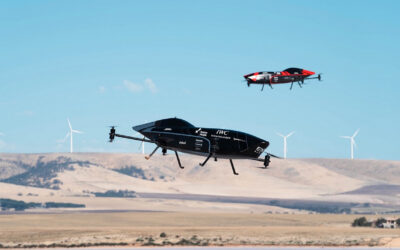
The personal air mobility sector is advancing toward commercial viability, supported by recent regulatory shifts and increased capital investment. The FAA’s MOSAIC (Modernization of Special Airworthiness Certification) rule has established a clearer framework for certifying personal electric vertical takeoff and landing (eVTOL) aircraft, which is a critical milestone for manufacturers aiming to move beyond the prototype phase. Companies are currently finalizing engineering and safety systems to meet these standards, with initial customer deliveries projected to begin as early as 2028.
For regions like the Buffalo-Niagara area, the emergence of personal eVTOLs suggests a future shift in short-range transportation dynamics. These vehicles are designed to be infrastructure-agnostic, potentially allowing for point-to-point travel that bypasses traditional ground-based congestion. As the technology matures, it may influence future urban planning, emergency response capabilities, and the demand for specialized landing infrastructure in suburban and commercial environments.
Main Drivers
FAA MOSAIC certification framework
Increased private capital investment
Advancements in electric propulsion and flight controls
Growing demand for urban air mobility
Projected Scenarios
Plausible
Buffalo Becomes A Hub For Commuter Air
Local manufacturers leverage Buffalo’s industrial aerospace heritage to pivot toward eVTOL component production, attracting venture capital to the Buffalo Niagara Medical Campus. High-net-worth commuters begin utilizing landing pads on downtown rooftops to bypass I-190 congestion during rush hour, bridging the gap between North Buffalo and suburban business parks in Amherst. The Buffalo Niagara International Airport integrates specialized vertiports, effectively turning short-haul air travel into a standard regional luxury.
WNY’s mobility landscape fundamentally shifts to prioritize sky-corridors over legacy highway maintenance, creating a high-skill manufacturing boom while intensifying socio-economic divisions in regional transit access.
Probable
Regulatory Hurdles Ground Personal Aviation Dreams
Stricter FAA noise abatement protocols combined with intense local pushback from residential groups in the Elmwood Village and North Buffalo effectively zone out urban eVTOL operations. Capital investment dries up as the cost of insurance and liability in the volatile WNY winter climate proves too high for insurers. The industry quietly retreats from the region, leaving behind empty pilot program hangars at the Niagara Falls Air Reserve Station.
Buffalo avoids the regulatory and noise-pollution headaches of the sector, refocusing its transport efforts on traditional public transit expansion and rail infrastructure.
Probable
Niche Adoption Remains A Quiet Background
Personal air mobility evolves into a boutique industry reserved for elite logistics, medical supply transport, and sporadic emergency response services. The technology is present but invisible to most residents, functioning primarily as a specialized tool for Kaleida Health to transfer critical patients between regional facilities. The promised mass-market commuter revolution fails to materialize, keeping traffic patterns on the Kensington Expressway stubbornly consistent.
Buffalo maintains its status quo as a car-dependent region, with air mobility acting merely as an incremental upgrade to existing institutional medical logistics.
Possible
Extreme Winter Weather Shifts Drone Logistics
A series of historic, multi-day lake effect snow events paralyze ground travel, prompting the city to authorize an emergency air-bridge for food and pharmaceutical delivery across the snowbelt. The success of these autonomous drone corridors forces the state to rethink regional infrastructure, leading to a permanent, subsidized fleet of heavy-lift electric craft managed by local disaster relief services. Buffalo becomes the global testbed for all-weather autonomous aerial logistics in cold-climate environments.
The city’s geography of isolation during extreme winters becomes its greatest asset for innovation, turning meteorological vulnerability into a competitive economic advantage for drone-based delivery tech.
🔀 Cross-Impact Analysis
×
Electric Propulsion Enables Short-Range Flight
Reinforcing
The integration of advanced thruster technology with personal eVTOLs accelerates the timeline for regional air travel across WNY. This synergy could allow Buffalo to utilize the Niagara River corridor as a natural, low-noise flight path for personal transit, effectively bridging the distance between the Buffalo Niagara International Airport and suburban hubs.
×
Public Transit Mitigates Household Financial Strain
Counteracting
While eVTOLs offer speed, their high initial capital costs stand in direct opposition to the urgent regional need for affordable public transit. In Buffalo, this creates a potential socio-economic divide where air travel serves a wealthy demographic, potentially siphoning political and financial support away from essential expansions of the NFTA Metro Rail or bus systems.
×
Autonomous Drones Disrupt Ground Logistics
Transforming
The convergence of personal eVTOLs and cargo drones will force a total overhaul of Buffalo’s low-altitude airspace management. This shift transforms regional logistics from road-dependent trucking models to a 3D grid, potentially repurposing aging industrial sites in South Buffalo into automated ‘vertiports’ for both passenger and delivery traffic.
×
Premium Rail Travel Experiences Expand
Reinforcing
Enhanced rail travel and personal aviation create a high-end multi-modal corridor between Toronto, Buffalo, and New York City. This combination bolsters WNY as a luxury tourism destination, where travelers arrive in the region via premium rail before utilizing private eVTOLs for scenic, short-range excursions to Niagara Falls or the Finger Lakes.
×
Electric Flying Car Racing Emerges
Reinforcing
A local eVTOL racing circuit could serve as a powerful economic catalyst for the Buffalo aerospace manufacturing cluster. By leveraging the region’s historical engineering talent, WNY could become a premier testing and racing hub, using repurposed infrastructure like the former Bethlehem Steel site as a high-tech arena for next-generation flight trials.
×
Autonomous Delivery Drones Disrupt Residential Environments
Counteracting
The noise pollution and privacy concerns stemming from drone delivery services will likely incite local municipal resistance to expanded personal aviation. In residential areas like the Elmwood Village or Amherst, this negative feedback loop may lead to strict zoning laws that block the adoption of eVTOLs, despite their potential for overcoming WNY’s winter road-clearing challenges.
🌊 Cascading Implications
Sources & Links
Buffalo Signals Laboratory · Transportation & Mobility