Mid-term · 2026–2031
Plausible
Autonomous Drones Disrupt Ground Logistics
Transportation & Mobility · Place & Environment · Scanned 2026-09-30
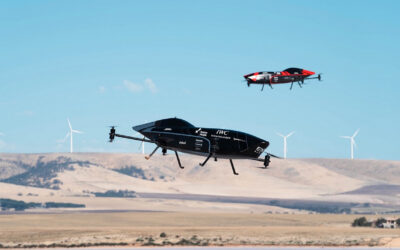
A new generation of autonomous drone technology is emerging, designed to challenge the economic dominance of ground-based trucking. By focusing on ultra-lightweight aircraft that weigh less than their own payload, startups are attempting to overcome the traditional inefficiencies of aviation, where conventional aircraft spend excessive energy moving their own weight. This approach aims to make aerial delivery a cost-competitive alternative to road transport for specific goods.
With recent significant capital injections from major industry players like DoorDash, the sector is scaling rapidly, moving from experimental deployments to high-volume operations. While drone delivery currently lacks the total scale and versatility of trucking, the push for cost parity suggests a future where autonomous aerial fleets could increasingly handle last-mile and regional logistics, potentially reshaping supply chain infrastructure and reducing reliance on traditional road-based freight.
Main Drivers
Venture capital investment in aerial logistics
Development of ultra-lightweight drone architecture
Pursuit of cost parity with ground trucking
Scaling of autonomous flight operations
Projected Scenarios
Probable
Skyward Logistics Transforms Buffalo Last Mile
Autonomous drone hubs appear atop the Buffalo Niagara Medical Campus and former industrial sites in the First Ward. These ultra-light fleets replace van deliveries for urgent medical supplies and high-frequency retail goods, significantly reducing freight congestion on the I-190.
Buffalo’s dense urban grid is repurposed for aerial traffic management, forcing a rethink of traditional zoning and public right-of-way usage.
Plausible
Regulatory Headwinds Ground Regional Drone Expansion
Strict federal noise ordinances and stringent safety mandates from New York State stall drone operations over Western New York’s residential neighborhoods. Logistics firms pivot back to traditional electric van fleets, favoring investments in charging infrastructure along the Thruway instead.
Buffalo remains reliant on conventional ground-based delivery models, deferring the shift to aerial transport for another decade.
Probable
Drone Tech Remains A Niche Utility
Drones perform only highly specialized tasks, such as monitoring critical bridge infrastructure across the Niagara River or seasonal agricultural surveying in Erie County. The broader commercial logistics market continues to depend entirely on established trucking routes connecting Canada and the U.S.
The technology settles into a background maintenance role, providing incremental efficiency without disrupting regional employment or infrastructure patterns.
Possible
Regional Air Transit Becomes Public Utility
After a private carrier bankruptcy, the Buffalo Niagara International Airport integrates an abandoned autonomous cargo fleet into a new public-access, low-altitude cargo transit system. This enables hyper-local, decentralized manufacturing, where small businesses in neighborhoods like Black Rock utilize ‘sky-lanes’ to share parts and components instantly.
The region inadvertently pioneers a democratized ‘maker-logistics’ model that revitalizes smaller-scale regional production outside of traditional corporate silos.
🔀 Cross-Impact Analysis
×
Premium Rail Travel Experiences Expand
Transforming
The influx of drone-based logistics could displace freight on local rail corridors, allowing Buffalo’s historic rail infrastructure to pivot toward high-end, experiential tourism. This dual-use transformation would revitalize underutilized tracks connecting Buffalo to the Hudson Valley, blending rapid delivery with luxury passenger transit.
×
Electric Flying Car Racing Emerges
Reinforcing
The emergence of eVTOL racing builds local technical workforce pipelines that also support the maintenance and scaling of autonomous delivery fleets. Buffalo’s proximity to aerospace manufacturing hubs could enable the city to become a testing ground for both commercial and recreational electric aviation technologies.
×
Autonomous Delivery Drones Disrupt Residential Environments
Counteracting
While drone logistics gain economic momentum, widespread residential backlash against noise pollution may trigger strict zoning laws across WNY suburbs. This friction could force local startups to prioritize industrial-only flight corridors, limiting the drone revolution to warehouses rather than doorstep deliveries.
×
Hybrid Flying Vehicles Enter Commercial Production
Reinforcing
The arrival of hybrid flying vehicles provides a secondary logistics layer that complements autonomous drones, especially for WNY’s rural agriculture and manufacturing sectors. Together, these technologies could bridge the ‘last-mile’ connectivity gap for remote parts of the Niagara region, reducing dependency on aging road bridges.
×
Smart Rail Digitalization Enhances Infrastructure
Reinforcing
Digital rail enhancements provide the necessary command-and-control framework that autonomous drones need for high-density navigation. By integrating sensor-rich rail networks with aerial traffic management, Buffalo could create a unified, multimodal logistics hub that maximizes efficiency across both surface and air.
×
Corporate Sponsorships Target Mobility Equity Gaps
Transforming
Corporate-led equity initiatives could redirect autonomous drone investments toward underserviced neighborhoods in East Buffalo, focusing on workforce training in drone repair and fleet management. This transforms a purely commercial logistics trend into a mechanism for upward social mobility and technological inclusion.
🌊 Cascading Implications
Sources & Links
Buffalo Signals Laboratory · Transportation & Mobility