Near-term · 2026–2030
Plausible
Electric Flying Car Racing Emerges
Transportation & Mobility · Place & Environment · Scanned 2026-09-27
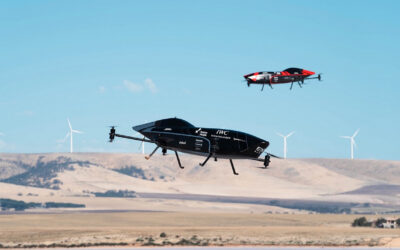
The emergence of crewed electric vertical take-off and landing (eVTOL) racing series represents a significant convergence of aerospace engineering, artificial intelligence, and high-performance sports. These racing platforms serve as critical testbeds for advanced flight control systems, real-time telemetry, and safety-focused AI, such as shared-control ‘forcefield’ technologies designed to prevent mid-air collisions. By utilizing modular vertiport infrastructure, these series are creating scalable frameworks for future urban air mobility (UAM) operations.
For regions like Buffalo-Niagara, which possess a legacy in aerospace manufacturing and a growing interest in advanced mobility, this trend highlights the potential for local integration into the eVTOL supply chain. The reliance on digital twins, complex data analytics, and sustainable propulsion systems suggests that the future of regional transportation infrastructure will be increasingly defined by the technological requirements of these high-speed, low-altitude aerial networks.
Main Drivers
Advancements in eVTOL flight certification
Integration of AI for real-time safety and telemetry
Development of modular vertiport infrastructure
Growth of data-driven digital media in sports
Projected Scenarios
Plausible
Buffalo Becomes Global Hub For eVTOL Racing
Buffalo’s legacy aerospace firms and the University at Buffalo pivot to become the primary R&D cluster for league-grade eVTOL propulsion. The former Bethlehem Steel site transforms into an automated vertiport testing ground, attracting high-stakes racing circuits that utilize the region’s unique Lake Erie wind profiles for flight training.
Buffalo revitalizes its industrial identity by becoming the technical engine room for a new global multibillion-dollar aerial sports industry.
Probable
Stifling Regulations Ground Urban Air Mobility
Strict FAA noise ordinances and local opposition to low-altitude transit in neighborhoods like Allentown and Elmwood Village effectively kill the racing series. eVTOL investments shift toward safer, less controversial coastal test markets, leaving Buffalo’s proposed vertiport projects abandoned and underutilized.
Buffalo misses a window to modernize its infrastructure and risks falling further behind in the emerging advanced mobility sector.
Probable
Niche Tech Stagnates As Background Innovation
eVTOL racing remains a fringe curiosity seen only in digital media, with zero impact on local Buffalo transit or industrial output. Engineering firms continue their traditional contracts with legacy aviation, while the city focuses exclusively on ground-based public transportation upgrades and pedestrian infrastructure.
The region maintains its status quo, safely ignoring aerial trends while remaining tethered to conventional logistical challenges.
Possible
Lake Erie Drones Disrupt Regional Governance
An unregulated surge of rogue racing drones, enabled by open-source flight software developed locally, creates an aerial traffic nightmare over the Buffalo waterfront. This ‘swarm’ era forces a radical rethinking of regional airspace, leading to the creation of a semi-autonomous aerial police force based out of Niagara Falls International Airport.
Buffalo becomes the world’s first living laboratory for hyper-localized aerial enforcement, completely rewriting municipal bylaws on airspace rights.
🔀 Cross-Impact Analysis
×
Autonomous Delivery Drones Disrupt Residential Environments
Counteracting
The introduction of loud, frequent racing eVTOLs will likely exacerbate public backlash against drone-filled skies over Buffalo’s neighborhoods. This friction forces local regulators to establish rigid ‘acoustic corridors’ and flight paths that prioritize residential quality of life over the expansion of high-speed aerial sports.
×
Hybrid Flying Vehicles Enter Commercial Production
Reinforcing
As hybrid flight tech matures, the boundary between consumer vehicles and racing eVTOLs blurs, creating a dual-use market for Buffalo’s aerospace manufacturers. This synergy accelerates the development of regional ‘sky-roads,’ transforming the Niagara Frontier into a testing ground for integrated ground-to-air transit.
×
Smart Rail Digitalization Enhances Infrastructure
Transforming
Digital rail corridors offer the perfect physical footprint for future vertiport clusters, allowing Buffalo to repurpose underutilized rail assets as multimodal mobility hubs. The combination of high-speed rail signaling and eVTOL telemetry creates an intelligent regional transport mesh that improves connectivity between Buffalo and the Southern Tier.
×
Corporate Sponsorships Target Mobility Equity Gaps
Reinforcing
By linking high-performance eVTOL racing with corporate social responsibility initiatives, Buffalo can leverage private investment to fund flight training programs for local students. This partnership transforms elite sports into an accessible pipeline for WNY workforce development, bridging the gap between aviation innovation and regional economic opportunity.
×
AI Enhances Specialized Vehicle Navigation
Reinforcing
Generative AI navigation platforms will become essential for coordinating complex, multi-vehicle traffic in Western New York’s variable weather conditions. This integration creates a safer, hyper-personalized aerial traffic control layer that enables both professional eVTOL racing and everyday specialized flight routes to coexist efficiently.
×
Aviation Fuel Infrastructure Faces Delivery Vulnerabilities
Counteracting
The recent fuel delivery crises at Buffalo Niagara International highlight the strategic necessity of transitioning toward electric propulsion to achieve regional energy autonomy. By moving away from fossil-fuel-dependent flight, WNY’s eVTOL sector can insulate itself from traditional logistics failures while capitalizing on the region’s abundant hydroelectric power.
🌊 Cascading Implications
Sources & Links
- Airspeeder ignites the future of mobility with flying cars
Dell Technologies
Buffalo Signals Laboratory · Transportation & Mobility